


What Is the Best China High Pressure Regulator Supplier?
Choosing the best China High Pressure Regulator supplier requires more than comparing prices or browsing polished product pages. A dependable supplier should understand pressure control in real operating conditions. Inlet pressure, outlet range, flow demand, gas compatibility, temperature, and connection standards all matter. A regulator used beside a cylinder bank may face vibration, pressure surges, and frequent adjustments. Small details can affect safety and service life.
Experience becomes visible through practical evidence. Ask whether the supplier can provide material specifications, dimensional drawings, pressure test records, and batch traceability. Brass bodies may suit some applications, while 316L stainless steel can support demanding environments. Confirm the diaphragm material, sealing compound, relief design, and expected flow performance. Do not rely on general phrases such as “high quality.” They sound reassuring, but they prove little.
A professional China supplier should communicate clearly before production begins. Sample testing, inspection photographs, calibration records, and independent verification can reduce uncertainty. Relevant quality systems, such as ISO 9001, should be checked rather than assumed. The best partner may also explain installation limits and maintenance requirements without exaggerating performance. No supplier is perfect. Even a capable factory may provide incomplete data or need clarification about your application. That is why technical questions, documented testing, responsive support, and consistent manufacturing deserve more attention than a low quotation. This guide examines those factors and helps buyers make a more informed decision.
What Is a China High Pressure Regulator Supplier?
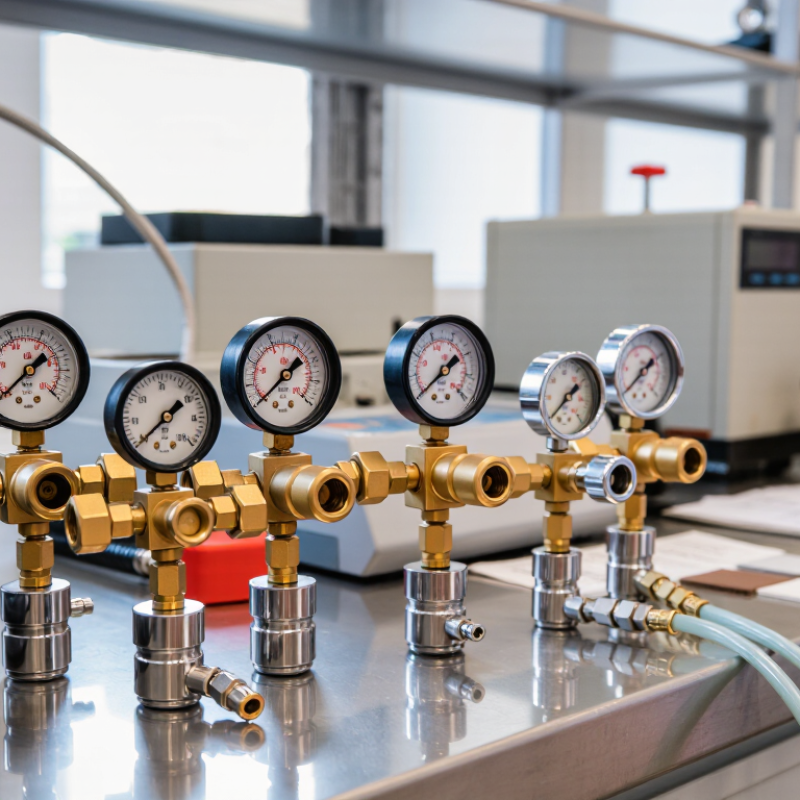
A China high pressure regulator supplier is more than a factory selling valves. It is an engineering partner that designs, manufactures, tests, and supports regulators for demanding gas systems. These products reduce high inlet pressure to a stable outlet pressure. They may serve laboratories, industrial equipment, medical facilities, and process plants.
According to Fortune Business Insights’ 2024 Pressure Regulator Market report, the global market was valued at about USD 16 billion in 2023. The report projects continued growth through 2032, driven by industrial automation, energy infrastructure, and process safety requirements. This growth increases demand for suppliers with documented performance, not only competitive pricing. In practical sourcing, buyers should inspect material certificates, pressure-test records, flow curves, and calibration procedures. Ask for traceability by batch and serial number. Small details matter.
A capable Chinese supplier should explain diaphragm materials, seal compatibility, inlet pressure limits, and temperature ranges in clear technical documents. ISO 9001 certification can support quality control, but it does not replace product-level testing. Independent inspection may be useful for unfamiliar projects. Some suppliers provide excellent samples but weaker production consistency. That risk deserves honest attention. The best evaluation includes repeated testing, realistic gas conditions, packaging checks, and after-sales response time. A reliable supplier communicates limitations before shipment, rather than hiding them behind impressive specifications.
What Is the Best China High Pressure Regulator Supplier? - What Is a China High Pressure Regulator Supplier?
| Evaluation Dimension | Recommended Benchmark | Typical Technical Data | Verification Method | Importance |
|---|---|---|---|---|
| Product Application | The supplier should offer regulators designed for the intended gas and operating environment. | Industrial gases, inert gases, oxygen, hydrogen, corrosive gases, laboratory gases, or specialty gas service. | Review the gas compatibility chart, application limits, and product datasheet. | Critical |
| Maximum Inlet Pressure | The rated inlet pressure must exceed the maximum pressure of the cylinder, manifold, or process line. | Common high-pressure configurations are rated around 200–300 bar (approximately 2,900–4,350 psi); some designs are available for higher pressures. | Check the permanent product marking, pressure test report, and datasheet. | Critical |
| Outlet Pressure Range | The adjustment range should cover the required downstream operating pressure without operating at the extreme end of the adjustment screw. | Typical selectable ranges include 0–1 bar, 0–4 bar, 0–10 bar, 0–25 bar, and 0–50 bar, depending on the application. | Compare the required set pressure with the rated adjustment range and relief-valve setting. | Critical |
| Pressure Stability | The regulator should maintain stable outlet pressure as inlet pressure and flow demand change. | Performance is normally evaluated through lock-up pressure, droop, creep, and flow-capacity testing. | Request test curves showing outlet pressure versus flow rate and inlet pressure. | Critical |
| Flow Capacity | The rated flow must exceed the maximum process demand while preserving the specified outlet pressure. | Capacity depends on gas type, inlet pressure, outlet pressure, orifice size, and connection design; it should not be judged by port size alone. | Request flow curves using the actual gas or a clearly stated test gas and reference conditions. | Critical |
| Body and Diaphragm Materials | Materials must be compatible with the gas, pressure, temperature, and corrosion conditions. | Common body materials include brass and 316/316L stainless steel; diaphragms may use stainless steel or elastomers selected for gas compatibility. | Review material certificates, wetted-part lists, and chemical-compatibility documentation. | Critical |
| Connection Options | The supplier should provide connection types and dimensions suitable for the target market and installation. | Available configurations may include CGA, DIN, BS, JIS, NPT, BSP, and tube or face-seal connections. | Confirm thread standard, size, sealing method, inlet orientation, and outlet configuration before ordering. | High |
| Safety Features | The design should include appropriate over-pressure protection and safe venting for the application. | Typical options include an internal relief valve, external relief valve, burst-disc protection, captive adjustment, and controlled venting. | Check relief settings, vent direction, allowable discharge location, and applicable risk assessment. | Critical |
| Manufacturing Quality System | A documented quality system with traceable inspection and calibration processes is preferred. | ISO 9001 certification is a useful baseline, but it does not by itself prove product suitability or pressure performance. | Verify the certificate validity, production controls, calibration records, and nonconformance procedures. | High |
| Applicable Standards | The product should be designed and tested against standards relevant to its gas service and market. | Examples include ISO 2503 for certain gas-welding regulators and EN 334 for gas pressure regulators; the applicable standard depends on the product type. | Request the exact standard edition, test scope, declaration, and supporting test records. | Critical |
| Leak and Pressure Testing | Every finished unit should undergo documented pressure, leak, and functional checks. | Testing may include shell pressure, seat leakage, external leakage, lock-up, and outlet-pressure verification. | Request a sample inspection report, acceptance criteria, test-gas information, and serial-number traceability. | Critical |
| Cleanliness and Degreasing | Oxygen and high-purity gas regulators require controlled cleaning and packaging. | Oxygen-service preparation commonly requires removal of oil, grease, particles, and other contaminants from wetted parts. | Confirm the cleaning procedure, inspection method, packaging specification, and certificate of cleanliness. | Critical for oxygen |
| Customization Capability | The supplier should be able to adapt pressure ranges, fittings, materials, gauges, labels, and packaging without weakening quality controls. | Possible options include dual-stage regulation, panel mounting, special inlet fittings, additional gauges, and custom outlet settings. | Evaluate engineering drawings, prototype approval procedures, and change-control documentation. | High |
| Quality Documentation | Documentation should be complete, consistent, and supplied in English when required for international projects. | Useful documents include datasheets, drawings, manuals, certificates, inspection reports, material records, and spare-part lists. | Review a complete documentation package before placing a purchase order. | High |
| Sample and Pre-Shipment Inspection | A qualified supplier should support sample approval and independent or customer-authorized inspection. | Inspection can cover dimensions, markings, materials, pressure settings, leakage, packaging, and quantity. | Use an agreed inspection plan and retain approved reference samples. | High |
| Lead Time and Supply Capacity | The supplier should provide a realistic production schedule supported by capacity and component availability. | Standard products commonly have shorter production cycles than customized or specially cleaned high-purity products; actual lead time must be quoted per configuration. | Check capacity plans, safety-stock policy, promised dates, and historical delivery performance. | Medium–High |
| After-Sales Support | Technical support, spare parts, repair instructions, and warranty procedures should be clearly defined. | Support should cover installation, adjustment, troubleshooting, seal replacement, calibration, and service intervals. | Request the warranty terms, spare-part availability period, response process, and service documentation. | High |
| Total Cost of Ownership | The best supplier should be evaluated on safety, consistency, service life, documentation, and support—not purchase price alone. | Consider unit price, tooling, testing, freight, spare parts, calibration, maintenance, rejected units, and downtime risk. | Compare quotations using the same technical specification and commercial terms. | Critical |
Related Posts
-
How to Choose the Right High Pressure Gas Regulator?
-
Identifying Common Issues with Gas Regulators: Ensuring Safety and Efficiency in Your System
-
How to Choose the Right Pressure Reducer for Your Needs
-
2026 Best Back Pressure Valve Options for Optimal Performance?
-
How to Choose the Right Pressure Regulator for Your Industrial Needs
-
The Ultimate Guide to Understanding Water Pressure Regulators: How They Enhance Your Plumbing System